
Move From Japan to Canada With Licensed Immigration Consultants
Last updated:

Choosing to immigrate to Canada is an important and personal decision. RightWay Canada Immigration Services supports individuals and families in Japan who are pursuing permanent residence, study or work opportunities, family reunification or another Canadian immigration pathway. Our role is to make the process clearer, more manageable and carefully prepared from the beginning.
Our team of licensed Canadian immigration consultants is regulated by the College of Immigration and Citizenship Consultants (CICC) and works in accordance with Canadian immigration requirements. Since 2016, RightWay Canada has assisted 234 clients from Japan and earned multiple industry recognitions, along with a strong reputation reflected in positive client reviews.
Every immigration case is different. We take the time to understand each applicant’s circumstances and goals, assess the available options and provide clear guidance on eligibility, required documents and the steps ahead. Our support goes beyond completing forms, helping applicants approach the process with greater clarity and confidence. Book a consultation with a licensed immigration consultant to discuss your individual situation. Information about our services and pricing is available on our fees page.
Japan to Canada Spousal Sponsorship
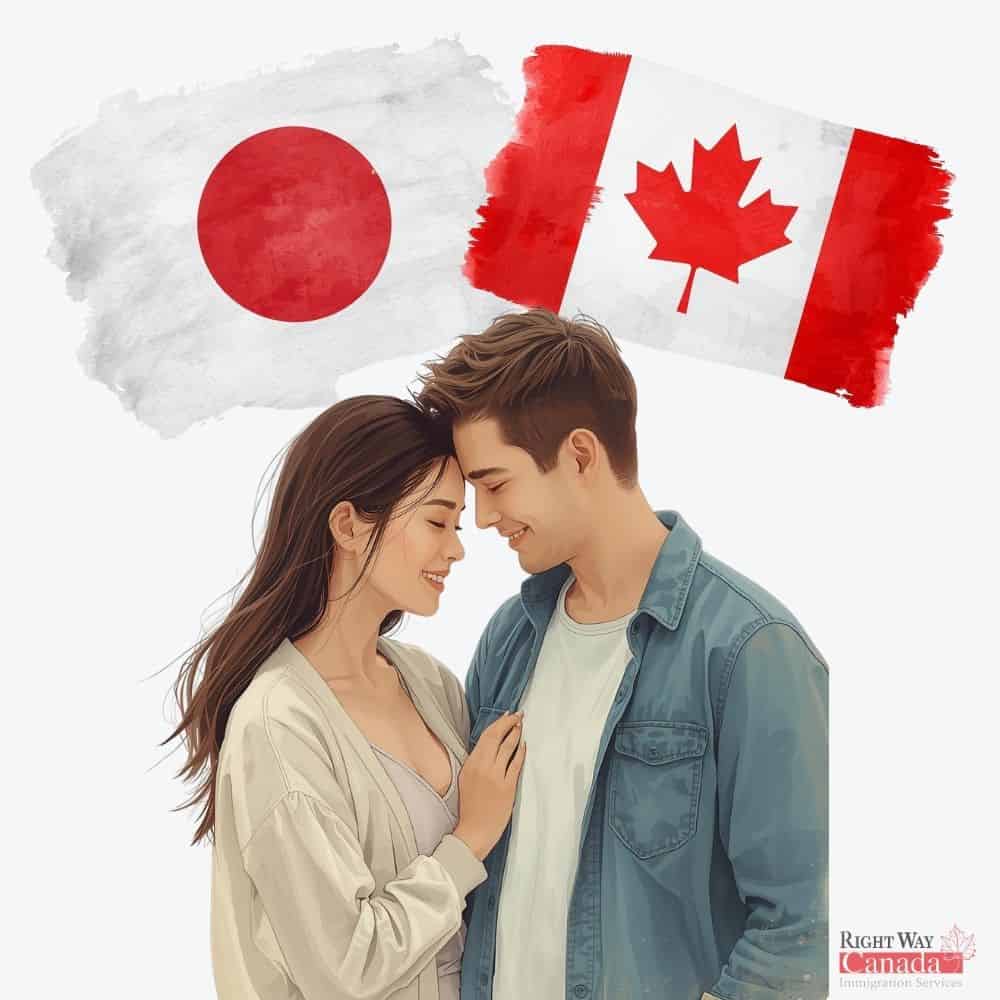
Applicants applying for spousal sponsorship from Japan must follow the country-specific IRCC instructions alongside the standard sponsorship application checklist. These instructions clarify whether additional local forms are needed and set out document requirements that apply to Japanese nationals.
For Japan applicants, no extra country-specific forms are required. However, Japanese passport holders and included family members must provide family registry documents with certified translations.
Required IMM
There are no extra country-specific forms required for Japan.
Family Documents
If the applicant holds a Japanese passport, the applicant and all family members included in the application must provide:
- a copy and certified translation of the Koseki Tohon
- a copy and certified translation of the Kaiseigen Koseki Tohon, the original source document of a re-established family registry
The Kaiseigen Koseki Tohon must include details of:
- birth
- marriage
- divorce, if any
The names of all family members must be included, including family members who have been removed from the registry because of death, marriage, change of residence, or another reason.
Japan to Canada Citizenship by Descent
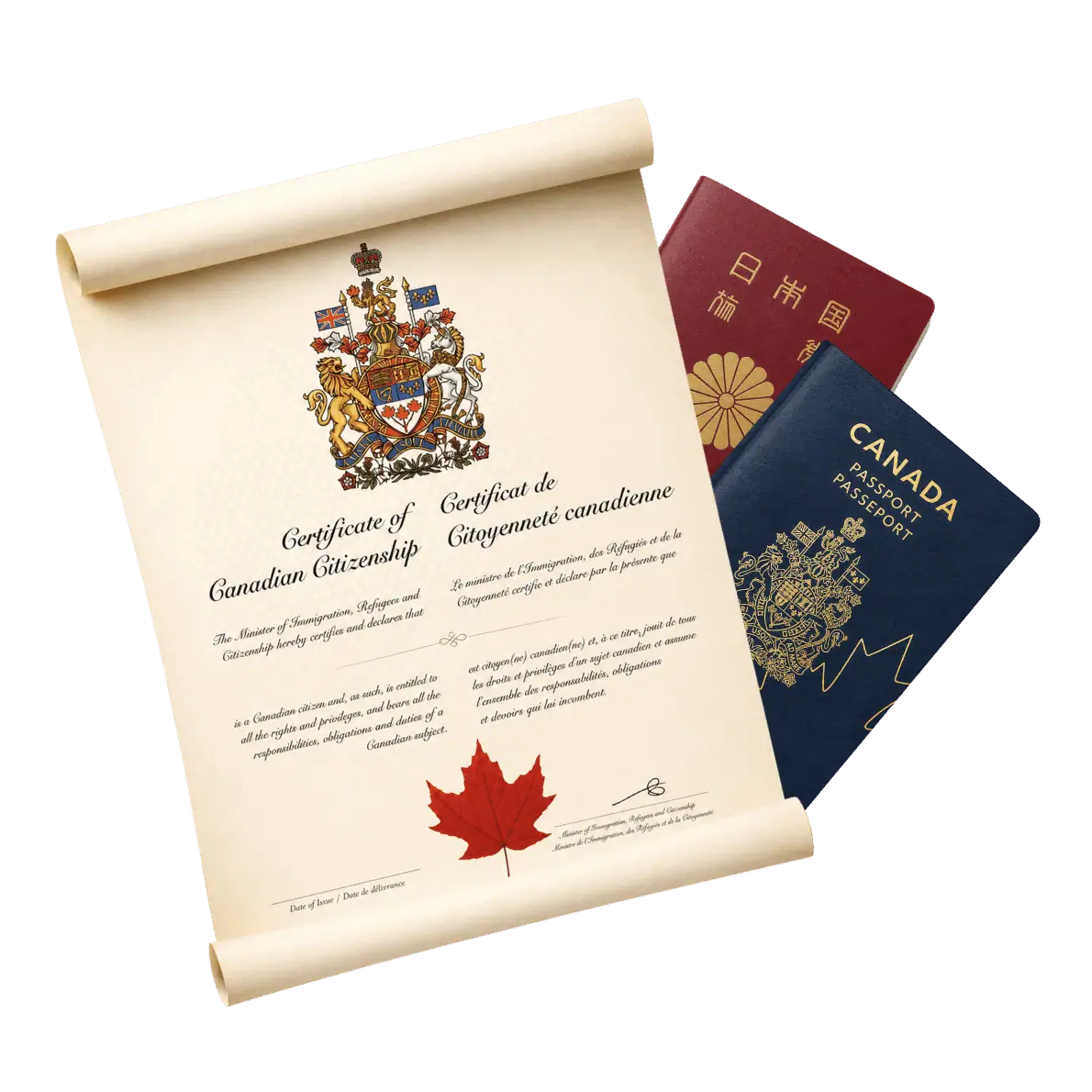
A person born in Japan may have a Canadian citizenship connection if a parent was already a Canadian citizen when they were born. This can happen in many Canada–Japan family situations, including where a Canadian parent moved to Japan for work, study, marriage, teaching, business, diplomacy, military service, or long-term residence before having children abroad. In many of these cases, the question is not only whether someone can move to Canada later, but whether Canadian citizenship may already exist through a parent.
Japan has long-standing connections with Canada through education, trade, professional mobility, tourism, cultural exchange, and family ties across both countries. These connections can involve Canadian citizens living in Japan temporarily or long term, Japanese-Canadian families, dual-national households, and children born abroad while one or both parents maintained a legal connection to Canada. For children and adults born in Japan, Canadian citizenship status can become important later in life for a passport, relocation to Canada, children’s status, education, or family planning.
For Japan-born applicants, proof of citizenship is often the step that confirms whether a Canadian connection is legally recognized. This review can be especially important after Canada’s updated citizenship by descent rules under Bill C-3, including situations where the Canadian parent was also born outside Canada. For families with roots, residence, or life experience in both Canada and Japan, an older citizenship connection may now be worth reviewing carefully before deciding the next step.
Japan to Canada Study Permit
Applicants applying for a Canada study permit from Japan must follow the Manila visa office instructions for local document requirements. These instructions are listed in the Manila Visa Office Additional Document Checklist — IMM 5836, which is used together with the standard Canada study permit checklist.
For Japan applicants, IMM 5836 focuses on passport submission rules, fee information, student records, a study plan, police certificate instructions, financial and tax documents, scholarship or funding evidence, and tuition-payment proof where applicable.
Required Forms
Japan study permit applicants must follow the Manila Visa Office Additional Document Checklist for study permits.
Country-specific checklist:
Applicants aged 18 or older must provide police certificates for each country where they have lived for six consecutive months or longer during the past 10 years, since turning 18.
Passport Documents
Applicants must follow the passport instructions listed in the Manila visa office checklist.
Applicants must provide:
- the original passport
- a copy of the passport bio-data page
The passport should have:
- at least two blank visa pages
- at least six months of validity
- validity for the duration of the proposed studies
If the applicant holds a passport from a visa-exempt country, they do not need to submit the original passport. In that case, only a photocopy of the passport bio-data page is required.
Applicants who do not live in their country of citizenship must also provide evidence of their status in their country of residence.
Student Records
Applicants from Japan must provide documents showing their current and past education.
Required student records include:
- copies of diplomas and certificates
- evidence of ongoing enrolment, if applicable
- post-secondary transcripts
- other up-to-date academic transcripts
Applicants must also include a personal study plan.
The study plan should describe the proposed program of study and explain how it relates to the applicant’s academic, technical, or vocational background and future career goals.
Financial Documents
Applicants from Japan must provide financial documents showing their financial situation.
Applicants must provide an official fee schedule showing:
- tuition
- accommodations and meal plans
- miscellaneous expenses, such as medical insurance, books, and memberships
Required financial documents include:
- bank records for the past six months, such as bank books, bank statements, or fixed deposits
- income tax documents
- employment reference letters showing earnings
- evidence of self-employment or business income, if applicable
The financial documents may belong to the applicant, the applicant’s spouse, or the applicant’s parents.
If another person is helping fund the studies, the applicant must provide:
- a letter from the supporter explaining why they are funding the studies
- evidence of the relationship to the supporter, if applicable
- the supporter’s bank records for the past six months
- the supporter’s income tax documents
- the supporter’s employment, self-employment, or business income evidence
If the applicant has a scholarship, school financial assistance, or funding from a government or other agency, they must provide evidence on official letterhead showing the full amount, duration, and conditions of the award.
If the applicant has already paid tuition, they must provide proof of payment.

Japan to Canada Visitor Visa
Applicants applying for a Canada visitor visa from Japan may need to follow the Manila visa office instructions for local document requirements. These instructions are listed in the Manila Visa Office Instructions — IMM 5877, which is used together with the standard temporary resident visa checklist.
For Japan applicants, IMM 5877 does not identify any separate Japan-specific documents, local authority records, country-specific forms, or Japan-only submission requirements.
Visa Office Instructions
Japan visitor visa applicants may need to follow the Manila Visa Office Instructions in addition to the standard temporary resident visa requirements.
Relevant visa office instructions:
IMM 5877 includes additional instructions concerning financial and employment evidence and applicants returning to Canada to continue their studies or work.
Financial and Employment Evidence
Applicants should provide documents showing their financial circumstances and current employment or other activity.
Financial evidence may include:
- bank statements covering the previous six months;
- recent pay slips;
- income tax documents; and
- evidence of savings, investments, property or other assets.
If another person or organization is paying for the visit, the application should include a signed letter confirming the financial support and evidence that the person or organization has sufficient funds.
Employed applicants should provide a recent employer letter confirming their position, salary, length of employment and approved leave.
Self-employed applicants should provide business registration documents and evidence of their business activity and income.
Retired applicants should provide proof of retirement or pension income, while students should provide proof of current enrolment.
Returning Students and Workers
Applicants returning to Canada to continue their studies should provide:
- a copy of their valid Canadian study permit; and
- a recent letter from their educational institution confirming current enrolment and the date they are expected to resume their studies.
Applicants returning to Canada to continue working should provide:
- a copy of their valid Canadian work permit; and
- a recent letter from their Canadian employer confirming that they are expected to return and resume their employment.