Move From the United States to Canada With Licensed Immigration Consultants
Last updated:
Choosing to immigrate to Canada is an important and personal decision. RightWay Canada Immigration Services supports individuals and families in the United States who are pursuing permanent residence, study or work opportunities, family reunification or another Canadian immigration pathway. Our role is to make the process clearer, more manageable and carefully prepared from the beginning.
Our team of licensed Canadian immigration consultants is regulated by the College of Immigration and Citizenship Consultants (CICC) and works in accordance with Canadian immigration requirements. Since 2016, RightWay Canada has assisted 4,389 clients from the United States and earned multiple industry recognitions, along with a strong reputation reflected in positive client reviews.
Every immigration case is different. We take the time to understand each applicant’s circumstances and goals, assess the available options and provide clear guidance on eligibility, required documents and the steps ahead. Our support goes beyond completing forms, helping applicants approach the process with greater clarity and confidence. Book a consultation with a licensed immigration consultant to discuss your individual situation. Information about our services and pricing is available on our fees page.
United States to Canada Spousal Sponsorship
Applicants from the United States do not have additional U.S.-specific IRCC forms or special country-specific document requirements for spousal sponsorship. Applications should therefore follow the standard IRCC spousal sponsorship instructions and document checklist, with careful attention to complete identity and civil-status documents, required translations where applicable and clear evidence supporting the relationship.
Canada’s spousal sponsorship program allows eligible Canadian citizens and permanent residents to sponsor a spouse, common-law partner or conjugal partner for permanent residence. IRCC assesses the sponsor’s eligibility, the genuineness of the relationship and the sponsored applicant’s admissibility before making a final decision.
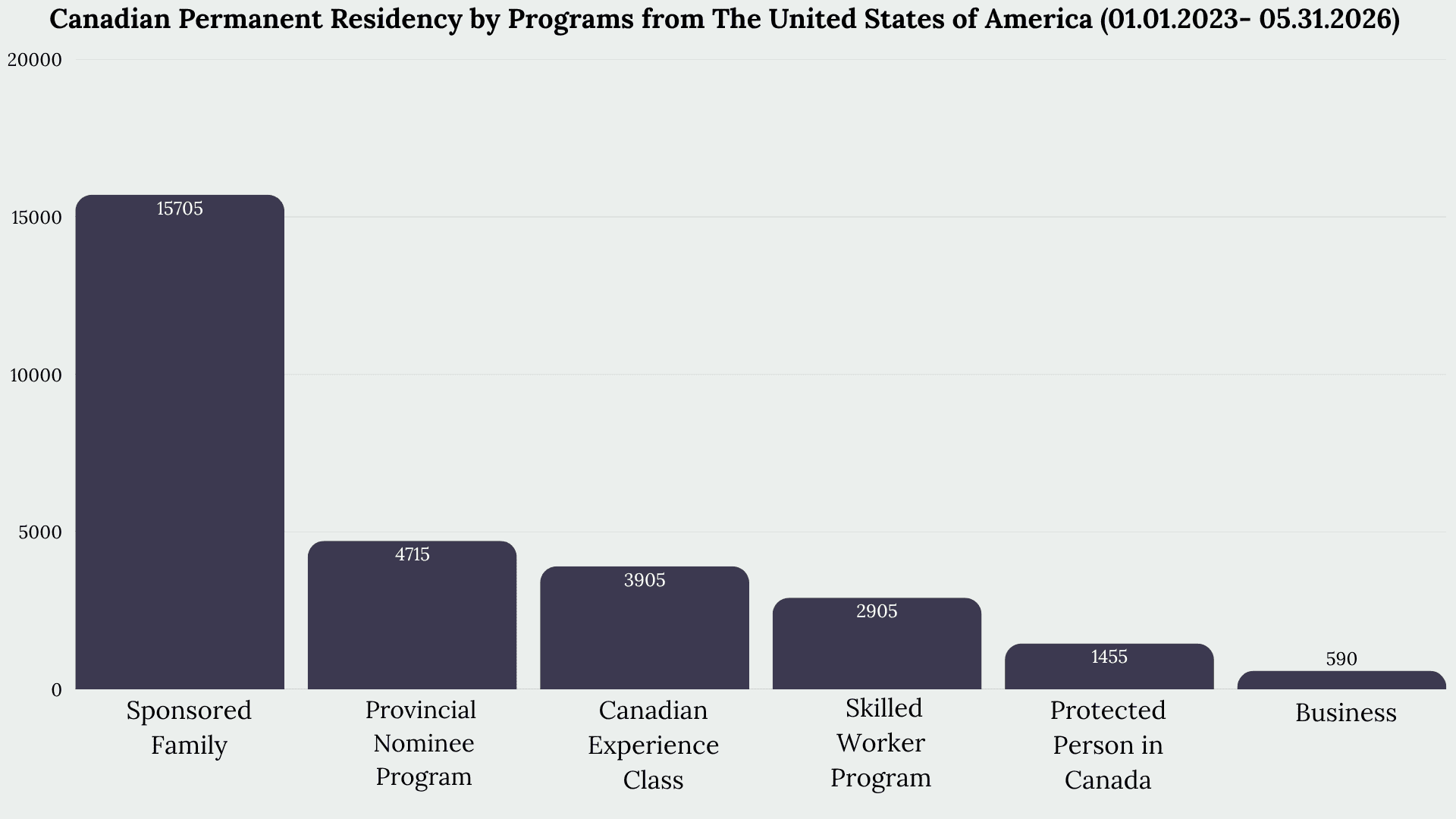
IRCC permanent residence statistics show that 13,650 U.S. citizens were admitted to Canada as sponsored spouses or partners from 2023 through May 2026. This included 4,365 admissions in 2023, 4,025 in 2024, 3,645 in 2025 and 1,615 from January to May 2026.

United States to Canada Citizenship by Descent
A person born in the United States may already have Canadian citizenship by descent if at least one parent was a Canadian citizen at the time of their birth. This is common in families with close ties across the Canada–U.S. border, where a Canadian parent may have moved to the United States for work, education, marriage, military service, or long-term residence before having children there.
Canada and the United States have deep migration, family, education, and professional ties, with generations of people building lives on both sides of the border. For some U.S.-born children and adults, those family connections may already include a legal connection to Canada through a Canadian parent.
In these cases, the person is usually not applying to become Canadian. They are applying for a Canadian citizenship certificate to prove citizenship they may already have. This certificate can be important for a Canadian passport, future relocation to Canada, children’s citizenship questions, or family situations where Bill C-3 has made an older Canadian connection worth reviewing again.
United States to Canada Express Entry
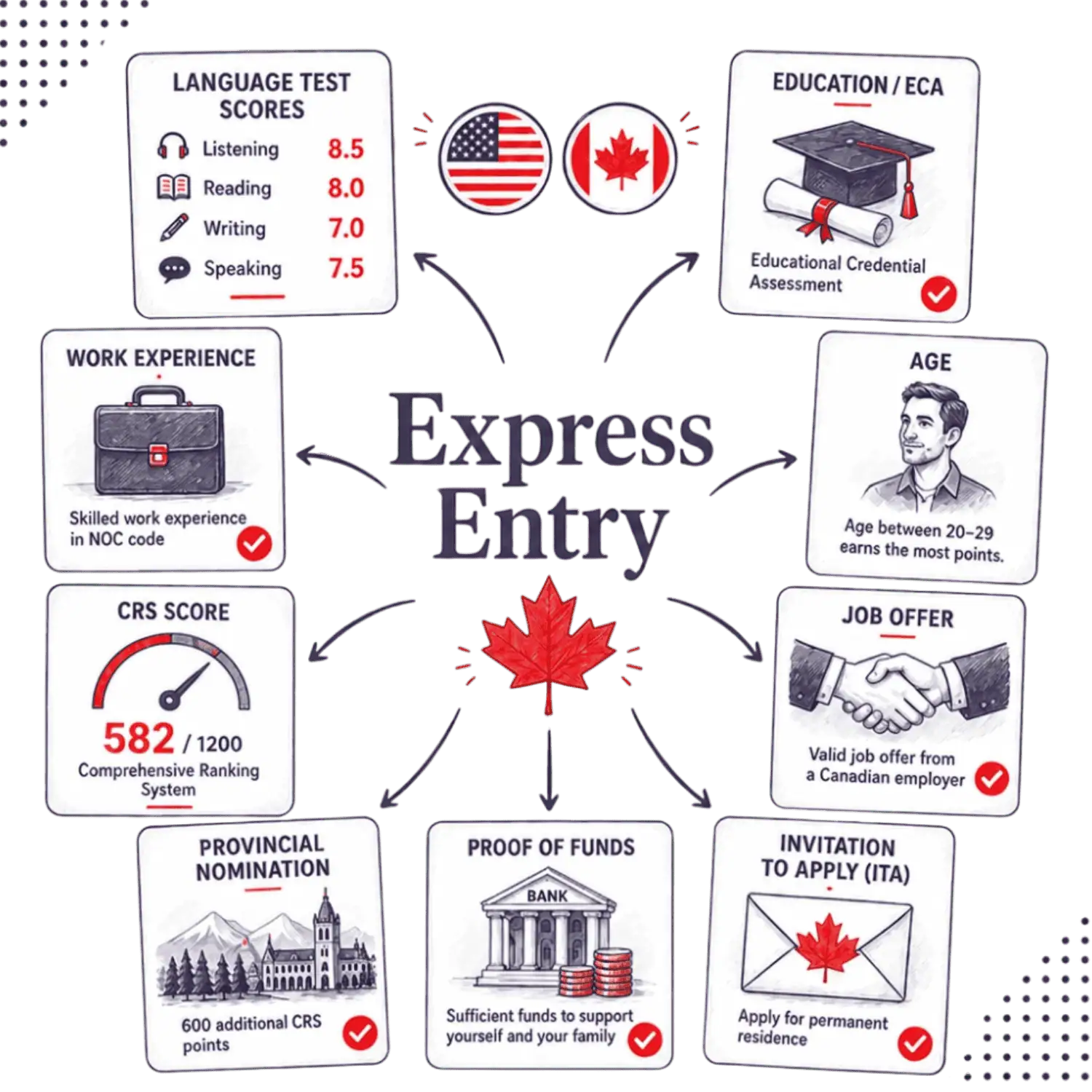
The United States is a notable source country for permanent residence through Canada’s Express Entry system. From 2021 to the first quarter of 2026, IRCC data shows 15,325 admissions of permanent residents under Express Entry for the United States of America, reflecting the pathway’s relevance for skilled workers moving from the U.S. to Canada.
For applicants from the United States, Express Entry planning often involves assessing how education, skilled work experience, language ability, Canadian connections, and cross-border work history fit into the CRS system. Some applicants may already have Canadian study or work experience, while others may be applying with U.S.-based professional experience and foreign or U.S. credentials that need to be documented clearly.
A United States-focused Express Entry approach should review the applicant’s CRS score, program eligibility, education credentials, work history, language results, and possible provincial nomination options. Careful preparation can help applicants compare their strongest route to permanent residence and prepare a complete application after receiving an invitation to apply.
United States to Canada PNP
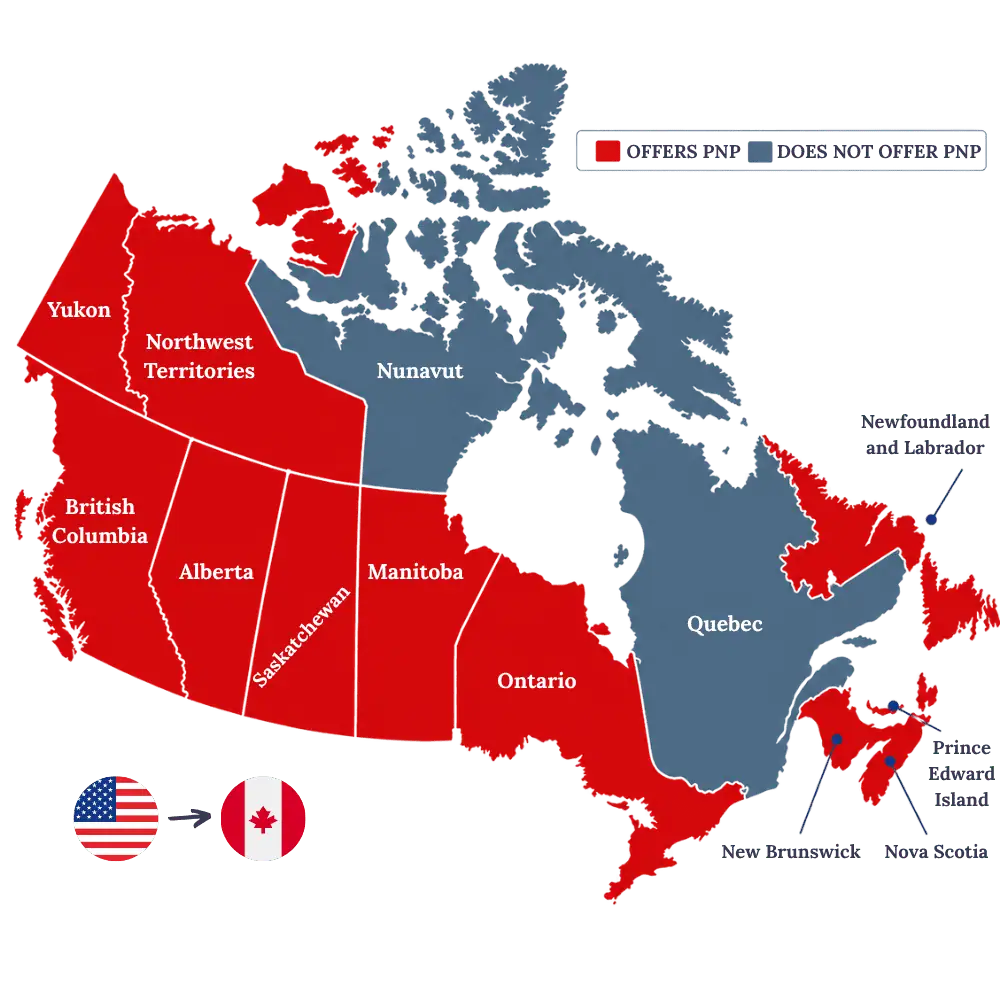
For applicants from the United States, the Provincial Nominee Program can provide a targeted pathway to Canadian permanent residence when their skills, work experience, and settlement plans align with the needs of a particular province or territory. Through the PNP, participating provinces and territories can nominate candidates who can contribute to their economy and intend to live in the nominating region.
A US-focused PNP strategy should consider the applicant’s occupation, education, employment history, language results, job offer, Canadian study or work experience, and connections to a province or territory. Requirements vary by provincial stream, so identifying the right program early and preparing clear evidence of qualifications, work experience, and settlement plans can help build a stronger nomination application.
PNP pathways may operate through Express Entry or through a separate non-Express Entry process. IRCC confirms that an Express Entry candidate who receives a provincial or territorial nomination gets 600 additional CRS points, substantially strengthening their position for an invitation to apply for permanent residence. For applicants from the United States, comparing eligible provincial streams and both application routes can help identify the most suitable pathway based on their professional background and intended destination in Canada.
United States to Canada Study Permit
IRCC does not currently provide a separate United States-specific study permit checklist, visa office checklist, or local document instructions. Applicants from the United States should therefore follow the standard IRCC study permit requirements and provide all supporting documents relevant to their studies, finances, and individual circumstances.
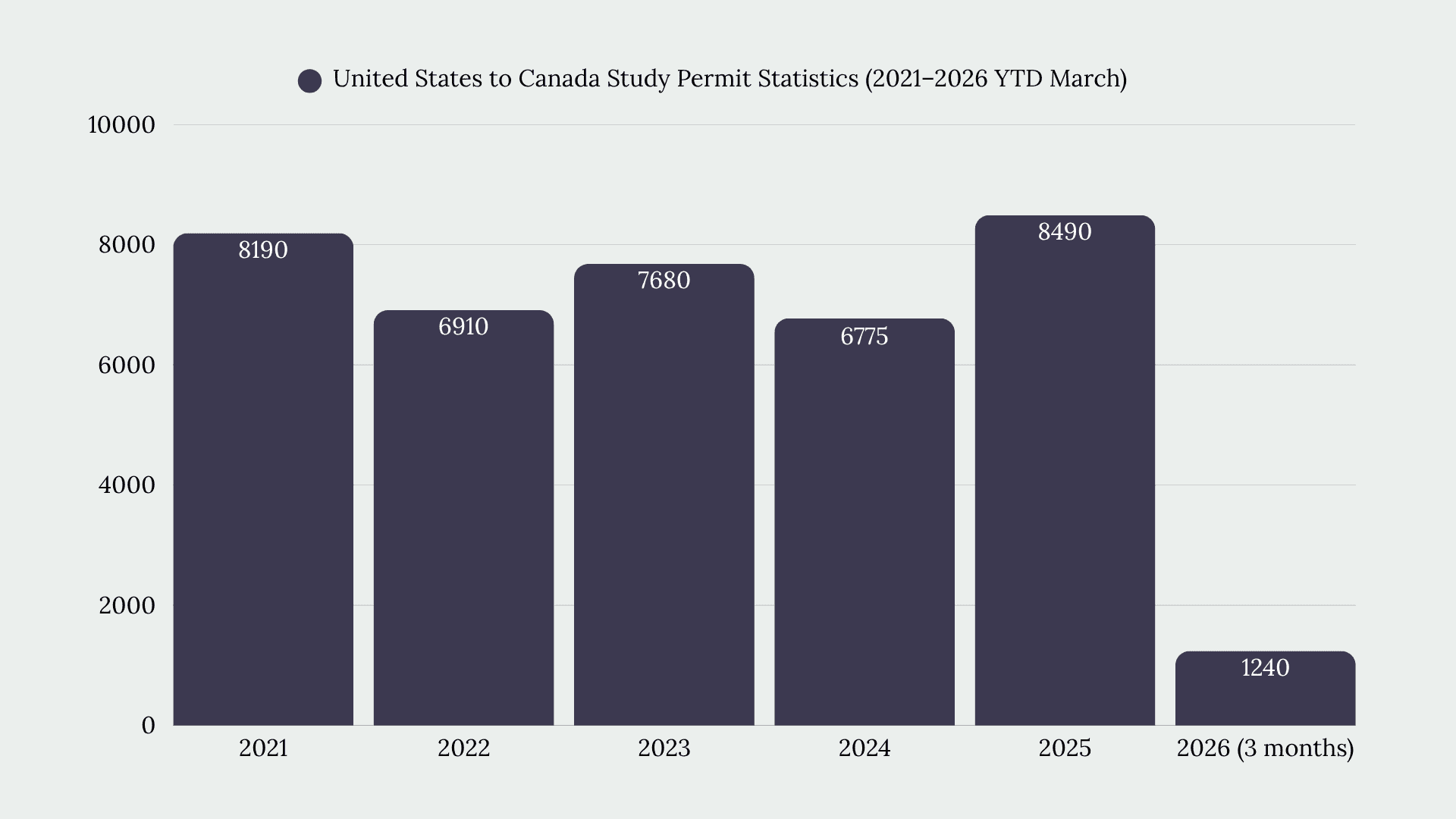
IRCC statistics show strong and continued interest in Canadian education among U.S. citizens. 8,190 study permits were issued in 2021, 6,910 in 2022, 7,680 in 2023, 6,770 in 2024, and 8,460 in 2025. An additional 2,675 study permits were recorded from January to June 2026.
These figures reflect the substantial and established presence of U.S. students in Canada’s international education system. Applicants should ensure that their study plans, financial resources, and supporting documents are clearly presented and meet all applicable IRCC requirements.

United States to Canada Visitor Visa
Sponsoring a spouse, common-law partner, or conjugal partner from the United States requires accurate forms, identity documents, and supporting evidence. Although there are no additional country-specific IRCC forms, American applicants must still meet all standard sponsorship requirements.
From 2016 to 2024, our Canadian immigration consultants helped 4,389 clients from the USA navigate Canadian immigration pathways. You can book a consultation for personalized guidance, review our Immigration Consultant Fees, or visit our Spousal Sponsorship Program page for eligibility, timelines, and requirements.