Russia to Canada Spousal Sponsorship
Last updated:
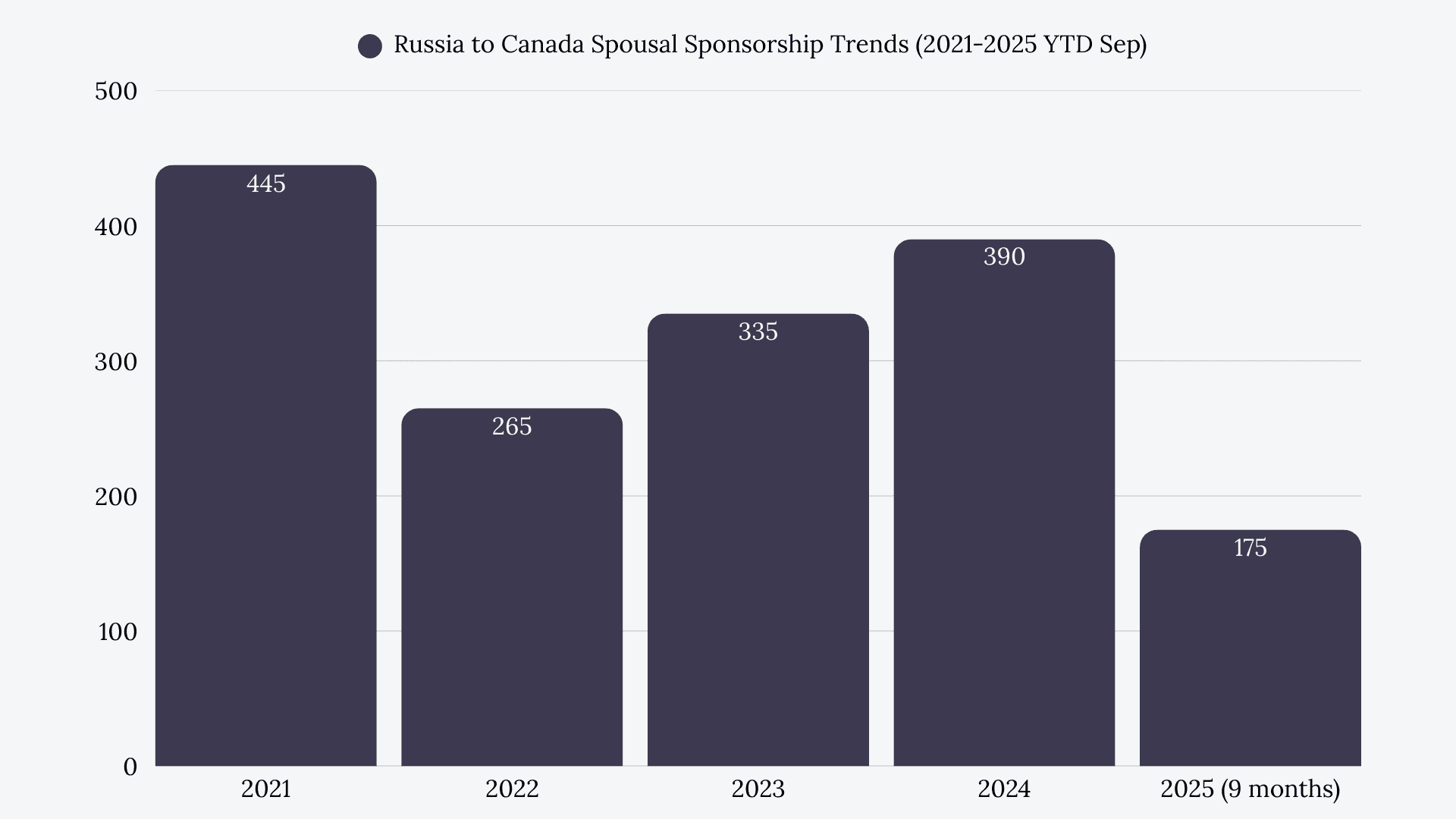
Spousal and partner sponsorship is one of the most important pathways for families hoping to reunite in Canada. While IRCC applies the same immigration rules globally, Russian applicants must understand several country-specific considerations that influence how their application is prepared. Our team has deep experience navigating these waters. Between 2016 and 2025, we assisted 145 clients from Russia, and we know exactly what officers look for. Here is the essential checklist you need to prepare.
With accurate documentation and well-organized evidence, applicants can move through the sponsorship process smoothly and confidently. If at any point you feel unsure about a document or a specific step, our consultants are available to guide you and help avoid costly delays. You can book an appointment for personalized guidance or review our Immigration Consultant Fees to compare packages and choose the level of support that fits your needs. For more information on eligibility, timelines, and requirements, visit our Spousal Sponsorship Program page and learn why families trust our Canadian immigration consultant.
Country-Specific Documents
Russia uses a centralized civil registry system managed by ZAGS (Запись актов гражданского состояния).
- Required Documents: For Canadian immigration, applicants typically need the full-form certificates:
- Birth Certificate (Свидетельство о рождении).
- Official Marriage Certificate (Свидетельство о заключении брака).
- Divorce Certificate if applicable (Свидетельство о расторжении брака).
- Translation Requirement: Most Russian civil documents are issued in Russian only, meaning certified translations into English or French are required.
- Apostille Requirement: Russia is a member of the Hague Apostille Convention. All original ZAGS documents used for immigration purposes must be apostilled by the Russian Ministry of Justice or other authorized bodies to confirm their authenticity for international use.
- Recent Issuance: Older Soviet-era records often lack full details or updated marital information. Applicants should obtain recently issued ZAGS duplicate certificates where possible.
- Supplementary Information – Your Travels (IMM 5562): The principal applicant and all family members included in the application who are 18 years old or older must complete this form.
Other “Must-have” Documents
Canada requires the Police Certificate from the Ministry of Internal Affairs (MVD).
- Required Document: The “Справка о наличии (отсутствии) судимости” (Certificate of criminal record status).
- Application: It can be requested in person at the regional Information Centre of the MVD, online via the Government Service Portal (Gosuslugi), or through a Russian consulate abroad.
- Coverage and Scope: The certificate only covers residence in Russia and the former Soviet republics up to the date of the USSR breakup. Additional police certificates are required for post-1991 residence in other countries.
- Consular Note: When applying outside Russia via a consulate, IRCC only accepts the original paper certificate. Printouts of online results are not accepted.
Mandatory Military Service Documentation (For Male Applicants)
- Details of Military Service [IMM 5546]
Complete this form for anyone included on the application who has ever- held a high-ranking or senior official government position or
- served in the military, army, defence or police unit (including National Service)
- Documentation Required: Male Russian applicants must provide documentation confirming their military status, even if they were exempted or deferred.
The required documents typically include the Military ID Card (Военный Билет) or a Certificate from the local military enlistment office (Voenkomat) confirming service, exemption, or deferral status. This is mandatory for background checks. Submit a copy of all pages of their military card or booklet, including the blank pages.
Document Variations & Regional Instability
- Name Spelling: Russian applicants frequently encounter challenges with different transliterations (e.g., Yuri vs. Yuriy) and name changes after marriage. Absolute consistency across passports, ZAGS documents, and translations is required, or an official explanation must be provided.
Regional Issues: Individuals who lived in Crimea, Donetsk, Luhansk, or other disputed regions may face difficulty obtaining police certificates or civil documents. IRCC often requires extra clarification or alternate documentation/affidavits from applicants who resided in these regions after 2014.