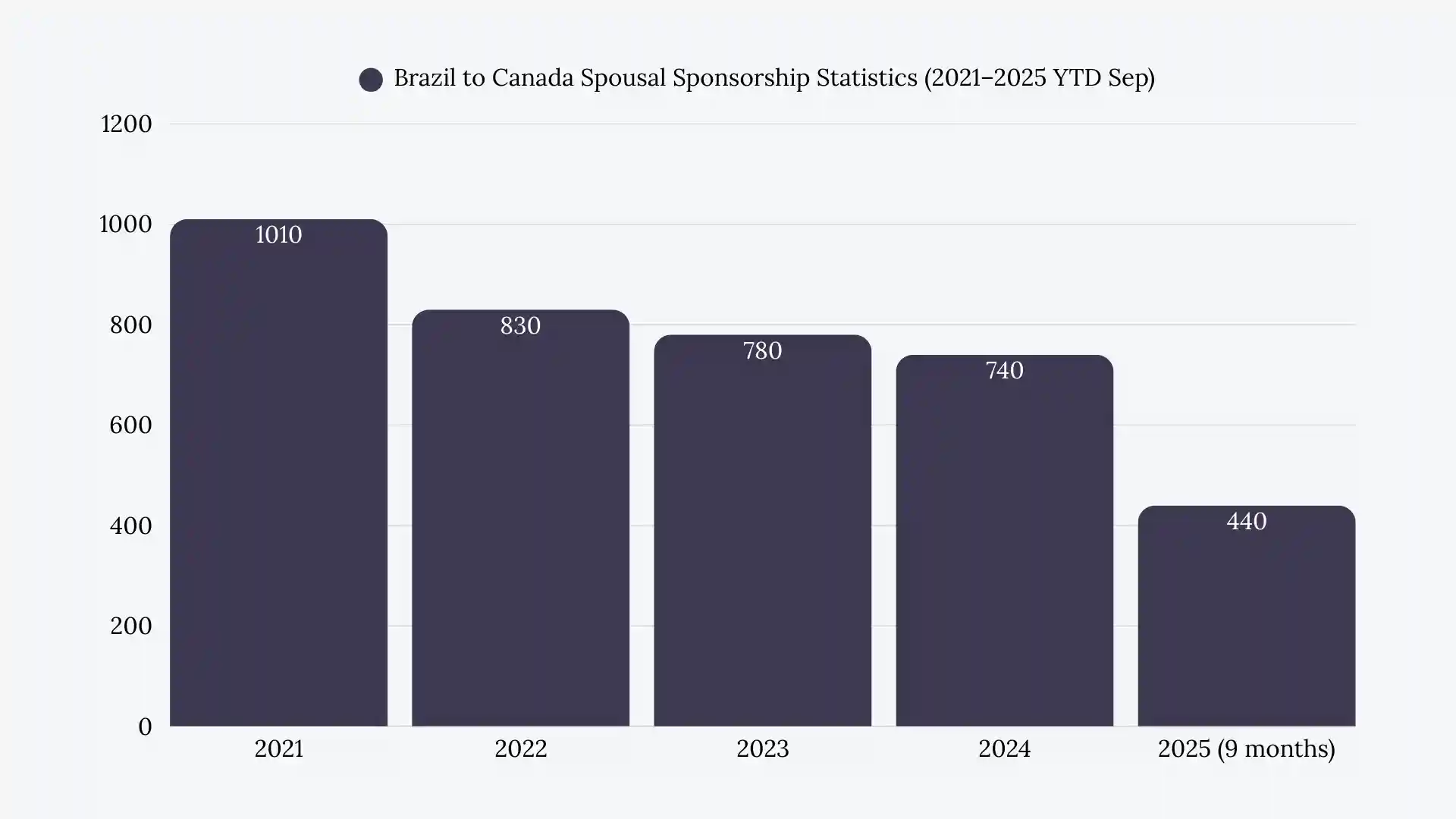
Brazil to Canada Spousal Sponsorship
Last updated:

Canada continues to welcome many families from Brazil, and spousal or partner sponsorship remains one of the most popular ways for couples to reunite and build a future together. While Immigration, Refugees and Citizenship Canada (IRCC)’s rules apply equally to all nationalities, Brazilian applicants should understand a few Brazil-specific considerations that can influence the process. Our Spousal Sponsorship Immigration Consultants have deep experience navigating these waters. Between 2016 and 2025, we assisted 177 clients from Brazil, and we know exactly what officers look for. Here is the essential checklist you need to prepare.
Need More Information? If you are looking for a broader overview of the process, including income requirements and general forms, you can read our detailed guide on the Spousal Sponsorship Program.
Let us handle the details with accurate documentation and organized evidence, Lebanese applicants can move through the sponsorship process smoothly and confidently. However, you don’t have to do it alone. You can book an appointment with our Canadian immigration consultants and start preparing. Also you can review our fees to find the package that fits your needs.
Country-Specific Documents
- Police Certificates (Certificados de Antecedentes): Brazilian applicants must prepare for specific police document requirements:
- A Federal Police Certificate (Certidão de Antecedentes Criminais da Polícia Federal).
- Note: Applicants must provide certificates from any country/region where they have spent six or more months since the age of 18.
- Apostille Requirement (for documents issued in Canada): As both Canada and Brazil are signatories to the Hague Apostille Convention, Canadian documents (such as birth certificates or divorce decrees) that are being used to support the application process in Brazil must be authenticated with an Apostille rather than traditional legalization.
- Complex Naming Conventions: Brazilian naming conventions often include multiple surnames (sobrenomes), which can include the mother’s family name and the father’s family name. Ensuring consistent and complete names across all IRCC forms and supporting documents (passport, birth certificate, marriage certificate) is critically important to prevent delays or rejection due to identity discrepancies.
- Marriage Certificate (Certidão de Casamento): If the couple married in Brazil, the marriage certificate must be obtained from the local Cartório de Registro Civil. This official document serves as primary proof of the relationship status. If the marriage took place outside Brazil, the marriage should ideally be transcribed/registered with a Brazilian Consulate or in a Cartório in Brazil, though IRCC may accept the foreign-issued certificate if it is legal in both the country of issue and in Canada.
Translation Requirements
- Certified Translations: Since all Brazilian documents (e.g., birth certificates, marriage certificates, police certificates) are issued in Portuguese, certified translations into English or French are mandatory.
- IRCC Requirements: IRCC typically requires a translation to be done by a certified professional translator who is a member in good standing of a professional translation association in Canada or abroad. This translation must be accompanied by an affidavit or a certified copy of the original document. Starting this process early can significantly reduce overall application delays.