Last updated:
Are you planning to sponsor your spouse, common-law partner, or conjugal partner from Argentina to Canada? You may be wondering if there are any Argentina-specific hurdles to watch for.
The short answer is no major country-specific add-ons: Argentina does not require extra IRCC forms, and IRCC currently lists no special document instructions for Argentina. However, Argentina-based applications can still be delayed when applicants overlook translation requirements or submit civil documents that are unclear or incomplete.
Based on IRCC’s Argentina instructions and the most common issues we see with Argentina-based files, here is exactly what you need to prepare to avoid preventable delays.
With clear Argentine civil documents, accurate police certificates, and complete, consistent translations, Argentina-based sponsorship applications can move forward smoothly with fewer clarification requests.
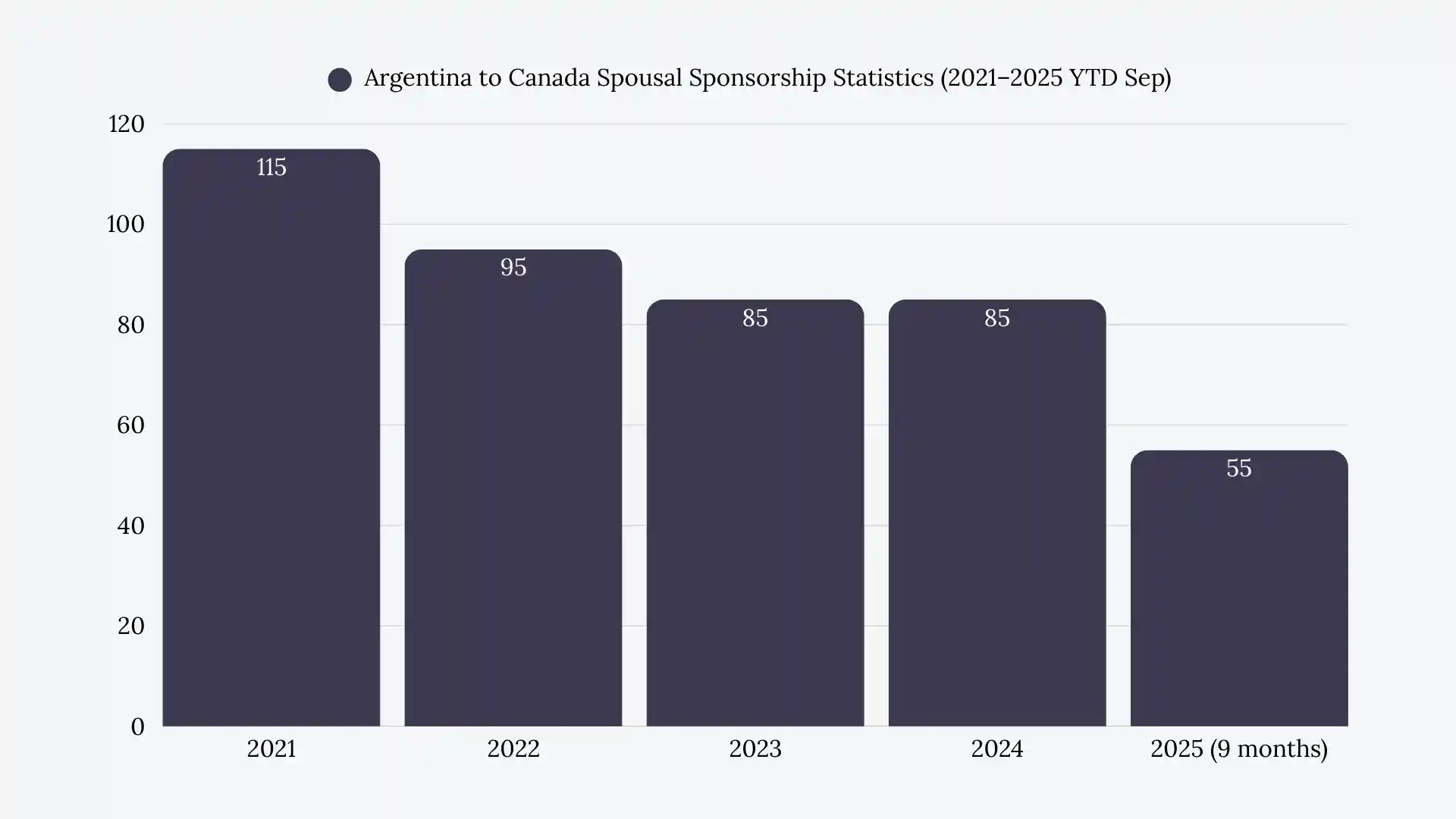
Between 2016 and 2025, our Canadian Immigration Consultants assisted 105 clients from Argentina, so we know exactly where Argentina-based applications tend to get stuck—and how to prevent it. If you’d like a full overview, you can read our detailed guide on the Spousal Sponsorship Program, review our fees, and book an appointment for more personalized guidance based on your situation.
Additional forms for residents
There are no extra IRCC forms required for applicants residing in Argentina.
Argentina – document instructions
IRCC currently lists no special document instructions for Argentina.
In practice, delays usually come from:
To avoid problems, make sure every civil document is complete, clearly legible, and shows all official stamps and registration details.
Police Certificate
Argentina does not have a unique IRCC format rule like some countries, but the police certificate still needs to meet standard IRCC expectations. To avoid delays:
If the applicant has lived in other countries for 6+ months (usually since age 18), IRCC may also require additional police certificates from those countries.
Most Argentine civil documents are in Spanish. If a document is not in English or French, you must submit:
Double-check that:
Small inconsistencies in names or dates are one of the most common reasons officers issue clarification requests.