Move From Democratic Republic of the Congo to Canada With Licensed Immigration Consultants
Last updated:
Choosing to immigrate to Canada is an important and personal decision. RightWay Canada Immigration Services supports individuals and families in the Democratic Republic of the Congo who are pursuing permanent residence, study or work opportunities, family reunification or another Canadian immigration pathway. Our role is to make the process clearer, more manageable and carefully prepared from the beginning.
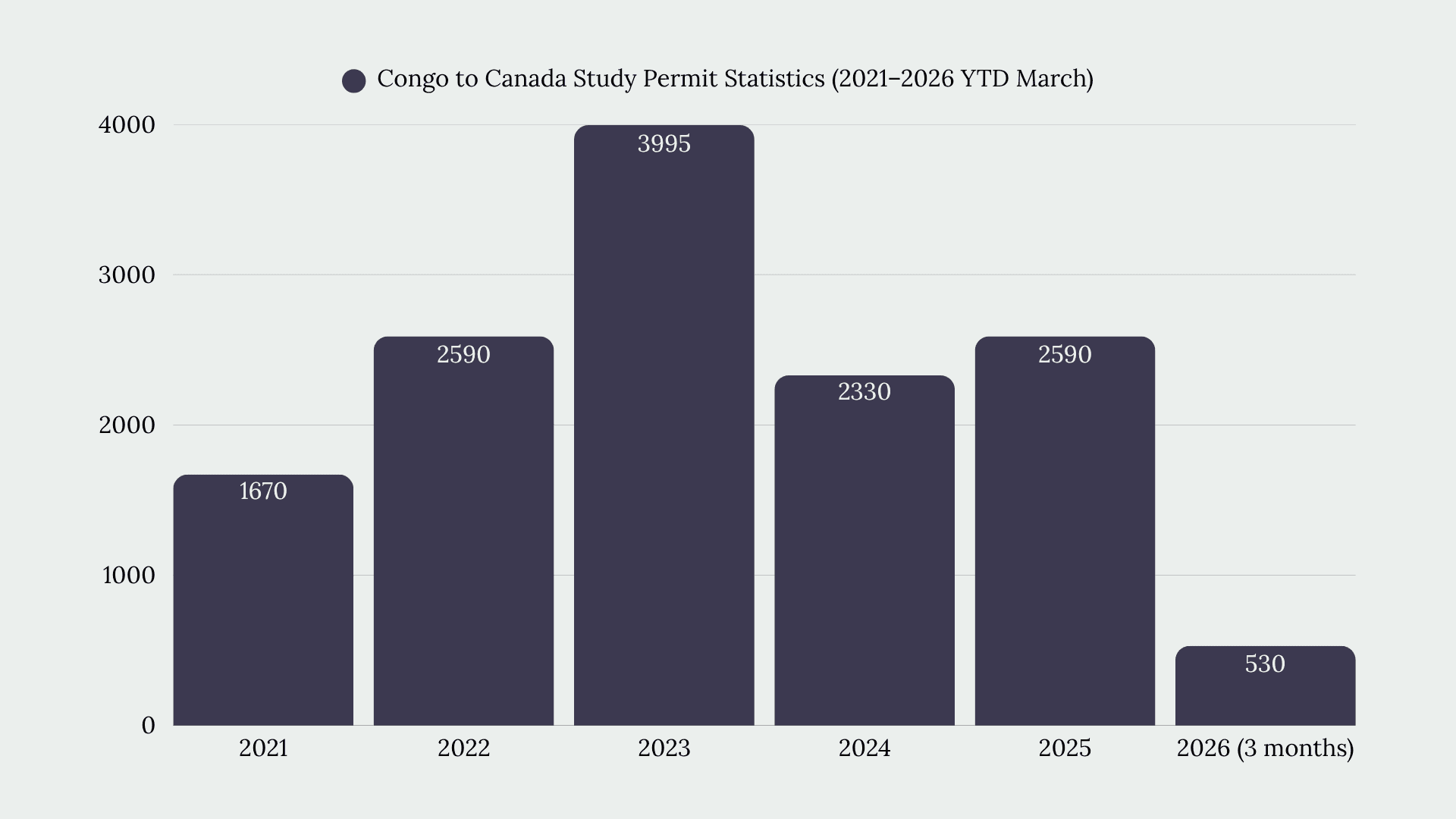
Our team of licensed Canadian immigration consultants is regulated by the College of Immigration and Citizenship Consultants (CICC) and works in accordance with Canadian immigration requirements. Since 2016, RightWay Canada has assisted 115 clients from the Democratic Republic of the Congo and earned multiple industry recognitions, along with a strong reputation reflected in positive client reviews.
Every immigration case is different. We take the time to understand each applicant’s circumstances and goals, assess the available options and provide clear guidance on eligibility, required documents and the steps ahead. Our support goes beyond completing forms, helping applicants approach the process with greater clarity and confidence. Book a consultation with a licensed immigration consultant to discuss your individual situation. Information about our services and pricing is available on our fees page.
Democratic Republic of the Congo to Canada Spousal Sponsorship
Applicants applying for spousal sponsorship from the Democratic Republic of the Congo must follow the country-specific IRCC instructions alongside the standard sponsorship application checklist. These instructions identify the additional local forms and supporting documents that may be required for an application involving Congolese nationals.
For Democratic Republic of the Congo applicants, the requirements include additional IMM forms, military service records where applicable, and supporting documents when a child’s birth certificate was not issued at birth. Minor children travelling abroad may also need to provide a travel permit or clearance.
Required Forms
Applicants from the Democratic Republic of the Congo must complete the following country-specific forms where applicable:
- Supplementary Information – Your Travels [IMM 5562]
- Required for the principal applicant.
- Required for all family members included in the application who are 18 years old or older.
- Details of Military Service [IMM 5546]
- Required for anyone included in the application who has ever:
- held a high-ranking or senior official government position, or
- served in the military, army, defence, or police unit, including National Service.
- Required for anyone included in the application who has ever:
If IMM 5546 applies, submit a copy of all pages of the person’s military card or booklet, including blank pages.
Children’s Documents
If a child’s birth certificate issued by the Democratic Republic of the Congo was not issued at the time of birth, submit copies of:
- the supplementary judgment
- another official document naming the parents
- school documents listing the parents, if available
- the household registry
If school documents listing the parents cannot be obtained, provide an explanation.
Democratic Republic of the Congo to Canada Study Permit
Applicants applying for a Canada study permit from the Democratic Republic of the Congo must follow the Dakar visa office instructions for local document requirements. These instructions are listed in the Dakar Visa Office Additional Document Checklist — IMM 5826, which is used together with the standard Canada study permit checklist.
For Democratic Republic of the Congo applicants, IMM 5826 focuses on recommended application timing, academic records, a one-page study plan, financial documents, sources of funds, and sponsor evidence where applicable.
Required Forms
Democratic Republic of the Congo study permit applicants must follow the Dakar Visa Office Additional Document Checklist for study permits.
Country-specific checklist:
IMM 5826 is used alongside the standard study permit checklist. It does not replace the general study permit requirements.
Intake Timing
Democratic Republic of the Congo study permit applicants should plan to submit their applications according to the recommended timelines for each Canadian academic intake:
- before June 15 for the fall session, which usually begins in September;
- before October 15 for the winter session, which usually begins in January; and
- before February 15 for the summer session, which usually begins in May.
These are local filing recommendations from the Dakar visa office rather than general study permit deadlines for all applicants. They do not guarantee that a decision will be made before classes begin, but they can help applicants submit their applications early enough for the intended intake.
Student Records
Democratic Republic of the Congo study permit applicants should provide documents confirming their current or previous post-secondary education.
Applicants should include:
- copies of transcripts from every post-secondary institution they have attended; and
- copies of any certificates, diplomas or degrees issued by those institutions.
These documents should remain focused on the applicant’s post-secondary academic history. General education records, admission requirements and letter of acceptance rules are addressed separately under the standard study permit requirements.
Study Plan
Democratic Republic of the Congo study permit applicants must provide a one-page study plan explaining the purpose of their proposed studies in Canada and how the program fits their educational background and future plans.
The study plan should explain:
- why the applicant wants to study in Canada in the program to which they have been accepted;
- the applicant’s overall educational goal;
- why they are not pursuing a similar program in the Democratic Republic of the Congo or in their country of residence;
- what research they have conducted into available study options in the Democratic Republic of the Congo or in their country of citizenship;
- how the proposed Canadian program may improve their employment opportunities in the Democratic Republic of the Congo or in their country of residence or citizenship; and
- the ties they have to the Democratic Republic of the Congo or to their country of residence or citizenship.
Applicants who have been out of full-time education for more than two years should also provide a CV or resumé.
Financial Evidence
Democratic Republic of the Congo study permit applicants should provide evidence that they have sufficient funds to cover the average cost of one year of study in Canada.
The application should include:
- bank statements covering at least the previous four months;
- documents explaining the source of any lump-sum deposits;
- additional evidence showing that the funds come from a reliable source; and
- a letter of undertaking and supporting financial documents from a parent or sponsor, where applicable.
The Dakar checklist places particular importance on the source of the funds. If an account contains large or recent deposits, applicants should provide documents showing where the money came from.
When a third party is financing the applicant’s studies, the application should include:
- the sponsor’s financial documents, such as bank statements and employment records;
- evidence showing the source of the sponsor’s funds;
- a letter explaining why the sponsor is providing financial support;
- details of the sponsor’s relationship to the applicant, number of dependants and amount of support;
- proof of the relationship, if the sponsor is a relative;
- proof of the sponsor’s legal status in Canada, if applicable;
- the summary page of the sponsor’s most recent Canada Revenue Agency income tax statement, if the sponsor is in Canada; and
- a copy of the sponsor’s photo identification.
Applicants who have received a scholarship, award or other financial assistance should provide an official letter confirming the amount of the funding, its duration and any applicable conditions.

Democratic Republic of the Congo to Canada Visitor Visa
Applicants applying for a Canada visitor visa from the Democratic Republic of the Congo must follow the Dakar Visa Office Instructions, IMM 5865, alongside the standard temporary resident visa requirements. These are visa-office instructions rather than Democratic Republic of the Congo-only instructions.
For Democratic Republic of the Congo applicants, documents not in English or French require certified translations. Legible photocopies are generally required, but birth and police certificates must be originals; a birth attestation is not accepted. The checklist outlines financial, employment, business, student, family-visit, and minor-travel documents.
Visa Office
IRCC does not publish a separate Democratic Republic of the Congo-only visitor visa checklist.
For visitor visa applications from the Democratic Republic of the Congo, IRCC’s current visitor visa flow shows Visa office instructions – Visit [IMM 5865].
The relevant document is the Dakar Visa Office Instructions, IMM 5865 E (02-2018).
These instructions are tied to the Dakar visa office, so they are visa-office instructions rather than Democratic Republic of the Congo-only instructions.
Document Rules
The Dakar checklist says that documents not in English or French must include a certified translation.
It also says applicants should submit legible photocopies, except that the birth certificate and police certificate must be original documents.
The checklist notes that the original birth certificate extract must be submitted and that a birth attestation is not accepted.
Financial Documents
The Dakar checklist gives specific financial-document examples.
For applicants paying for their own trip, the checklist lists:
- original personal bank statements for the past six months
- pay slips for the past six months
For applicants who own a business, the checklist lists:
- business registration certificates
- tax returns
- certificates of qualification
- business financial statements
- original commercial bank statements from the past six months
If a third party is paying for the trip, the checklist lists:
- letter of financial custodianship
- recent bank statements for personal accounts
- work contract showing salary
- pay slips
- term deposit statements showing the person’s name, account balance, and date the account was opened
- copy of the person’s photo identification, such as a national identity card or passport
For employees, the checklist asks for an employer letter and pay slips from the past six months. The employer letter must be dated no more than two months before the application is submitted and must show:
- profession
- salary and allowances
- years of service
- leave authorization for the planned trip to Canada
For entrepreneurs or autonomous workers, the checklist lists:
- financial statements related to the business activity for the last two years
- letters patent
- business licence
For students, the checklist lists:
- recent letter of enrolment
- transcripts from the educational institution
Specific Situations
The Dakar checklist includes some situation-specific document items.
For applicants visiting a Canadian host who is a blood relative, the checklist lists proof of the relationship, such as:
- host’s original birth certificate
- family booklet
For business travel, the checklist lists:
- financial statements
- letters
- letters patent
- business licence
- transaction reports
- prospectus
- documents showing business contacts in Canada
- proof of relationships with businesses in Canada
- invitation from Canadian business contacts confirming the nature and duration of the business trip
- Canadian point of contact, business address, telephone number, and explanation of the visit
- employer letter showing purpose of trip, date hired, position, salary, approved leave dates, and who will cover travel costs
For a seminar, trade show, or conference, the checklist lists:
- invitation from the Canadian organization
- registration and hotel confirmation
- written confirmation from the organization covering travel and stay costs, if applicable
- employer letter confirming the trip, specific reason and duration, and employment details
For students requesting a visa renewal to return to Canada, the checklist lists:
- passport valid for the remaining duration of studies
- valid study permit
- admission letter or proof of registration for the upcoming session
- transcripts from completed sessions
- airplane ticket or reservation
- valid Certificat d’acceptation du Québec, if applicable
- Canadian bank statements for the past 12 months
For minors, the checklist lists:
- passport
- notarized permission to travel signed by both parents, or notarized custody document, if applicable
- child’s birth certificate
- both parents’ birth certificates
- proof of registration for the next school year
- most recent transcript
For a minor travelling alone or with an adult other than a parent, the checklist also lists:
- notarized letter from the guardian in Canada who will receive the child
- notarized parental authorization from both parents