Move From Bolivia To Canada With Licensed Immigration Consultants
Last updated:
Choosing to immigrate to Canada is an important and personal decision. RightWay Canada Immigration Services supports individuals and families in Bolivia who are pursuing permanent residence, study or work opportunities, family reunification or another Canadian immigration pathway. Our role is to make the process clearer, more manageable and carefully prepared from the beginning.
Our team of licensed Canadian immigration consultants is regulated by the College of Immigration and Citizenship Consultants (CICC) and works in accordance with Canadian immigration requirements. Since 2016, RightWay Canada has assisted 93 clients from Bolivia and earned multiple industry recognitions, along with a strong reputation reflected in positive client reviews.
Every immigration case is different. We take the time to understand each applicant’s circumstances and goals, assess the available options and provide clear guidance on eligibility, required documents and the steps ahead. Our support goes beyond completing forms, helping applicants approach the process with greater clarity and confidence. Book a consultation with a licensed immigration consultant to discuss your individual situation. Information about our services and pricing is available on our fees page.
Bolivia to Canada Spousal Sponsorship
Applicants from Bolivia do not have additional Bolivia-specific IRCC forms or special country-specific document requirements for spousal sponsorship. Applications should therefore follow the standard IRCC spousal sponsorship instructions and document checklist, with careful attention to complete identity and civil-status documents, required translations and clear evidence supporting the relationship.
Canada’s spousal sponsorship program allows eligible Canadian citizens and permanent residents to sponsor a spouse, common-law partner or conjugal partner for permanent residence. IRCC assesses the sponsor’s eligibility, the genuineness of the relationship and the sponsored applicant’s admissibility before making a final decision.
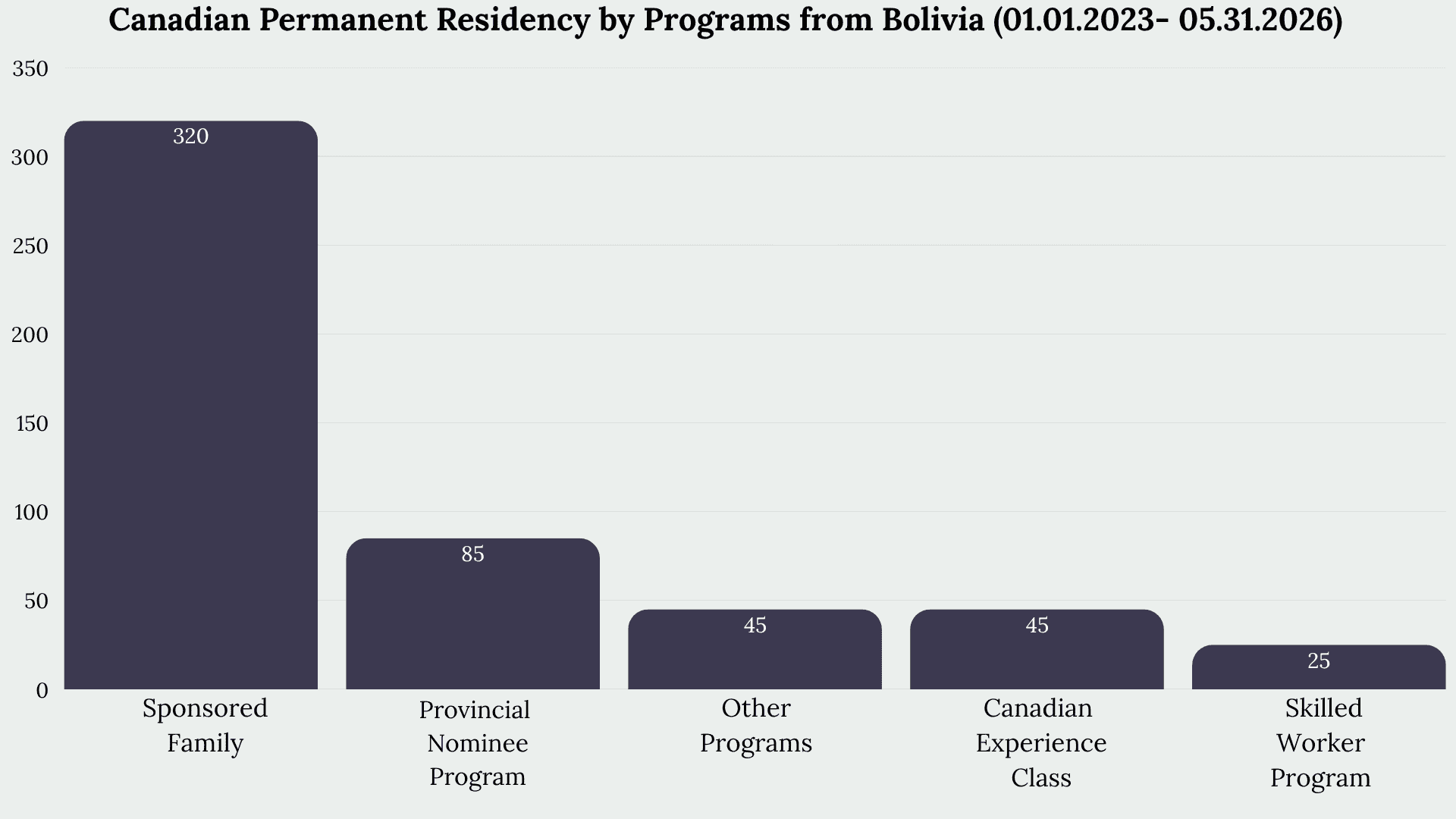
IRCC permanent residence statistics show that 235 Bolivian citizens were admitted to Canada as sponsored spouses or partners from 2023 through May 2026. This included 30 admissions in 2023, 110 in 2024, 40 in 2025 and 55 from January to May 2026.

Bolivia to Canada Study Permit
IRCC does not currently provide a separate Bolivia-specific study permit checklist, visa office checklist, or local document instructions. Applicants from Bolivia should therefore follow the standard IRCC study permit requirements and provide all supporting documents relevant to their studies, finances, and individual circumstances.
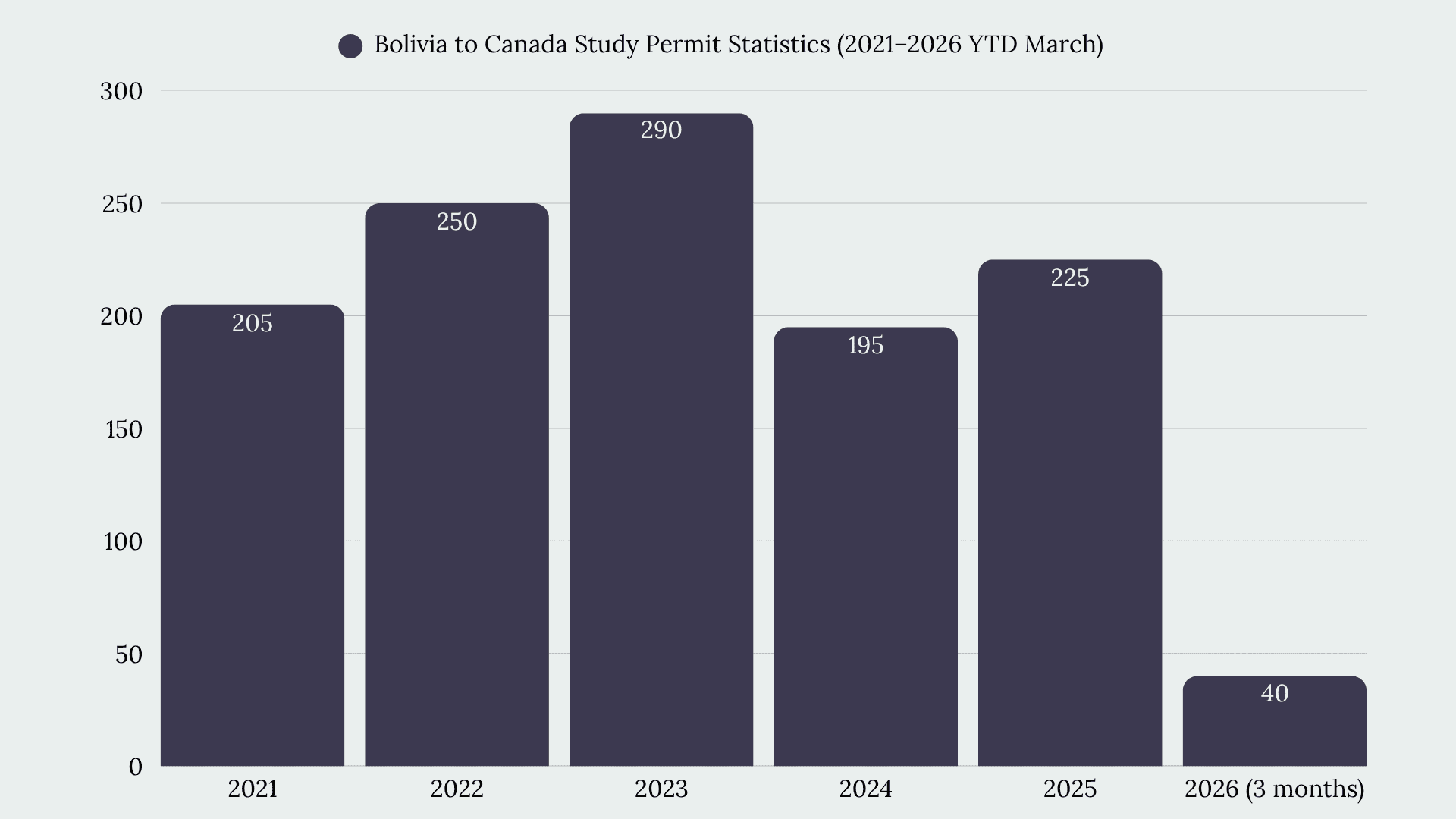
IRCC statistics show continued interest in Canadian education among Bolivian citizens. 205 study permits were issued in 2021, 250 in 2022, 290 in 2023, 195 in 2024, and 225 in 2025. An additional 75 study permits were recorded from January to June 2026.
These figures reflect the ongoing presence of Bolivian students in Canada’s international education system. Applicants should ensure that their study plans, financial resources, and supporting documents are clearly presented and meet all applicable IRCC requirements.

Bolivia to Canada Visitor Visa
IRCC does not provide a separate document checklist for Canadian visitor visa applicants from Bolivia. Applicants should therefore follow the standard IRCC visitor visa requirements and submit the supporting documents requested through their online application.
IRCC recorded 1,200 visitor visas for Bolivia in 2023, 1,425 in 2024, and 965 in 2025, followed by 460 from January to June 2026.
A Canadian visitor visa can allow eligible Bolivian travellers to visit Canada temporarily for purposes such as tourism, visiting family or friends, or certain business activities. The supporting documents required will depend on the applicant’s individual circumstances, purpose of travel, financial situation, and plans for their temporary stay in Canada.