Canadian Citizenship Processing Time and Application Timeline
Last updated:
Canadian citizenship processing times vary by the type of application and the complexity of the case. Permanent residents applying through naturalization follow a different process from people seeking proof of citizenship through a Canadian parent, while most people born in Canada do not need to submit an IRCC citizenship application. After submission, IRCC checks whether the application is complete before issuing an acknowledgement of receipt and beginning further review. Published processing times are estimates rather than guaranteed deadlines and may change based on application volumes, completeness and verification requirements. Depending on the case, processing may include eligibility and background reviews, a fingerprint request, a citizenship test, a final decision and a citizenship ceremony.

Citizenship by Naturalization Processing time
Citizenship by naturalization is the process through which an eligible permanent resident becomes a Canadian citizen. IRCC publishes an estimated processing time for naturalization applications, but the estimate may change and is not a guaranteed deadline. Applicants should check IRCC’s official processing-time page for the latest estimate that applies to citizenship applications.
Minors applying to become Canadian citizens follow the processing time for the applicable minor citizenship application.
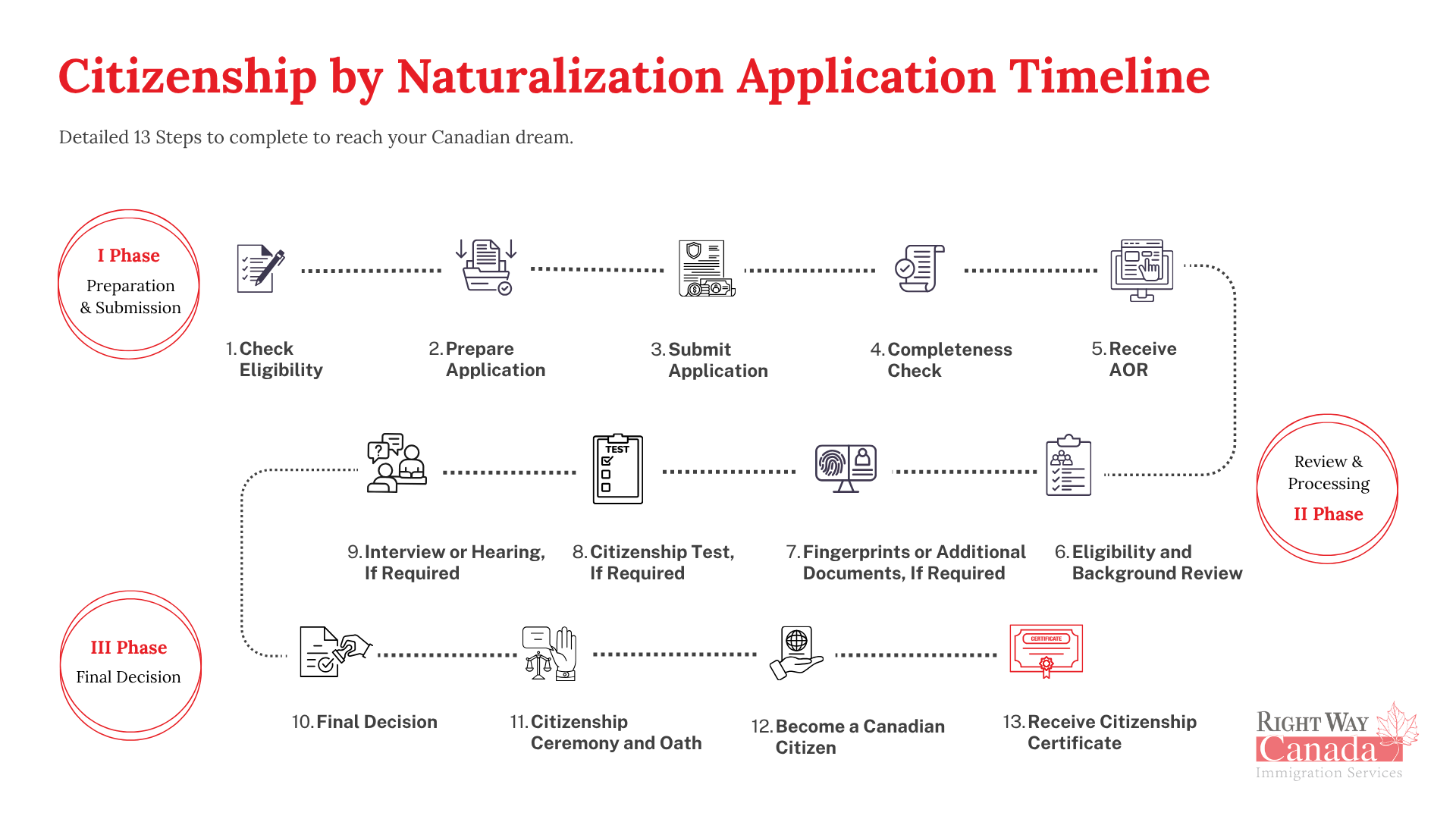
Processing begins when IRCC receives a complete application. If an application is incomplete and returned, processing generally begins again after the corrected application is resubmitted and accepted. Once the application passes the completeness review, IRCC issues an acknowledgement of receipt, or AOR. There is no fixed timeline for receiving an AOR.
After receiving the AOR, applicants can generally use the Canadian citizenship tracker to review their application status, required actions and progress. A period without visible updates does not necessarily mean that processing has stopped.
During processing, IRCC reviews whether the applicable citizenship requirements are met, including citizenship language requirements where applicable, and completes identity, background and prohibition checks. Depending on the application, IRCC may also require a citizenship test, fingerprints, additional documents, a citizenship interview or a hearing.
Processing may take longer when further verification, documents or security checks are required, or when an applicant misses an appointment or responds late to an IRCC request.
If the application is approved, applicants who are required to take the Oath of Citizenship become Canadian citizens only after completing the ceremony. Canada allows dual citizenship, so becoming a Canadian citizen does not require a person to give up another citizenship under Canadian law, although the rules of the other country should also be considered. If the application is refused, IRCC sends a decision notice explaining the outcome and any applicable next steps. Applicants should keep their contact information current, monitor their email and tracker, and respond promptly to IRCC requests.
How can I check my citizenship application status, and what should I do if the online tracker is unavailable, not updating or showing unclear information?
After receiving an acknowledgement of receipt, applicants can normally use the Canadian citizenship application tracker to review their overall status, application history, next steps and the progress of individual sections.
Tracker updates may not appear immediately, and a period without visible changes does not necessarily mean that processing has stopped. A section marked as complete also does not mean that the entire application has been approved. A “Waiting on you” status generally means that IRCC needs documents, information or another action from the applicant before processing can continue.
If the tracker is unavailable or showing unclear information, applicants should confirm that they are using the correct account details and try again later. If the application has passed IRCC’s current processing time or an important update appears to be missing, they may submit an enquiry through the IRCC web form. Repeated enquiries do not speed up processing.
How long do the citizenship test, interview and ceremony stages take, how can they be tracked or rescheduled, and what may cause delays?
IRCC does not publish a fixed waiting period between the citizenship test, citizenship interview, final decision and ceremony. Timing depends on the individual application, whether earlier reviews are complete, scheduling capacity and whether IRCC requires further information.
Applicants should monitor their tracker, email and IRCC notices for invitations and instructions. If they cannot attend a scheduled test, interview, hearing or ceremony, they should follow the directions in the notice and contact the issuing office as soon as possible to explain the circumstances and request a new date.
Rescheduling may extend the overall processing timeline. Additional reviews, unresolved eligibility issues, missed notices or failure to attend an appointment without contacting IRCC may also cause delays and could affect the application.
Can I travel while my citizenship application is being processed, and what should I do to avoid missing IRCC requests or appointments?
Applicants may generally travel while their citizenship application is being processed. However, they must remain eligible, maintain permanent resident status until taking the Oath of Citizenship and carry the documents required to return to Canada.
While outside Canada, applicants should continue monitoring their email, tracker and Canadian mailing address. IRCC may send document requests, test invitations, interview notices or ceremony instructions during the trip, and applicants remain responsible for responding by the stated deadline.
If travel prevents attendance at a scheduled appointment, the applicant should contact IRCC promptly and follow the instructions in the notice. Travel should not be arranged on the assumption that IRCC will automatically reschedule a test, interview, hearing or ceremony.
When is urgent processing available for a citizenship-by-naturalization application, and how can it be requested?
IRCC may consider urgent processing for a citizenship-by-naturalization application in exceptional circumstances. This may include needing Canadian citizenship to obtain or keep a job, urgent travel because of a death or serious illness in the family when another passport cannot be obtained, or a successful Federal Court decision involving an earlier citizenship application.
The request should clearly explain why urgent processing is needed and include supporting evidence, such as an employer’s letter, medical records, a death certificate, confirmed travel information or court documents.
IRCC reviews each request individually. Meeting one of the listed circumstances does not guarantee urgent processing or completion by a particular date.
How do I update or correct my name, address, email address, phone number or other personal details during processing, and can these changes affect the application?
Applicants should notify IRCC promptly when their contact information or important personal details change. The correct method depends on the type of change, how the application was submitted and where the applicant is located.
Address, email address and phone number changes can generally be reported through the appropriate online service or IRCC web form. A legal name change, correction to personal information or change in family circumstances may require supporting documents.
Reporting a change does not normally harm the application. However, failing to keep information current can cause applicants to miss document requests, notices or appointments and may delay processing. Applicants should keep a record of the update and continue checking their previous contact channels until the new information appears in IRCC’s records.
Citizenship by Descent Processing time
Citizenship by descent generally applies to a person born outside Canada who may already be a Canadian citizen through a Canadian parent or, in some cases, an earlier generation. The person is usually not applying to become a citizen. Instead, they apply for a citizenship certificate so IRCC can confirm their status and issue official proof of Canadian citizenship.
IRCC does not publish a separate processing time for citizenship by descent. Applicants should use the current estimate for citizenship certificate applications, also known as proof of citizenship. The published time is an estimate rather than a guaranteed deadline, and complex cases may take longer.
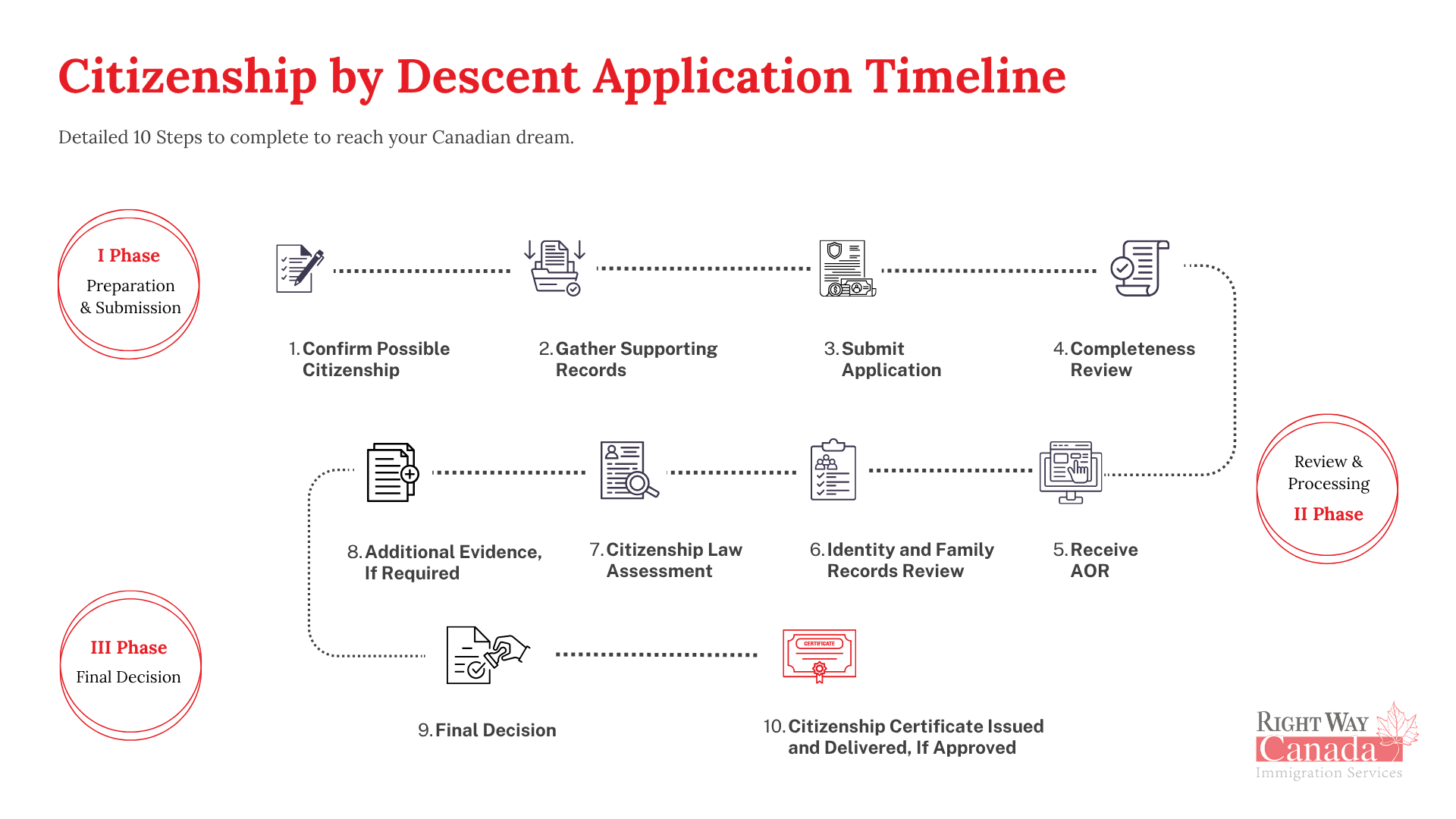
IRCC reviews birth records, proof of the Canadian parent’s citizenship and documents confirming the family relationship. Additional evidence may be required when records are missing, inconsistent, registered late or difficult to verify.
Eligibility may depend on the citizenship law that applied when the person was born. Bill C-3 changed the first-generation limit on December 15, 2025. People born before that date who were previously excluded by the limit or certain earlier citizenship rules may now be Canadian citizens. For a child born outside Canada on or after that date to a Canadian parent who was also born or adopted outside Canada, the parent generally must show at least 1,095 cumulative days of physical presence in Canada before the child’s birth.
If approved, IRCC issues a paper or electronic citizenship certificate. The certificate is official proof of Canadian citizenship and may be used to apply for services or a Canadian passport, but it is not itself a travel document.
How long does a citizenship-by-descent certificate application take, how can it be tracked, and what may delay processing?
Citizenship by descent is generally confirmed through an application for a citizenship certificate, also called proof of citizenship. IRCC does not publish a separate processing time for descent cases, so applicants should use the current estimate for citizenship certificate applications. The published time is an estimate rather than a guaranteed deadline, and complex applications may take longer.
The method used to track the application depends on how and where it was submitted. Online applicants can generally review updates and messages through their IRCC account. Paper applicants can check the application online after receiving an acknowledgement of receipt. Applicants should follow the status instructions that apply to their submission type.
Processing may take longer if the application is incomplete, family or citizenship records are missing, information differs across documents, foreign records require verification, or IRCC requests additional evidence. Cases affected by earlier citizenship laws, Bill C-3, or the substantial-connection requirement for certain children born outside Canada may also require a more detailed assessment.
In exceptional circumstances, applicants may request urgent processing, including where delay could cause harm or hardship, contribute to statelessness, prevent access to employment, education or essential benefits, or delay bringing a Canadian citizen’s minor child born outside Canada to Canada. Urgent processing is not guaranteed and must be supported by an explanation and relevant evidence.
When is urgent processing available for a citizenship certificate application?
IRCC may consider urgent processing for a citizenship certificate application in exceptional circumstances. This may include situations where delay could cause serious harm or hardship, contribute to statelessness, prevent access to employment, education or essential benefits, or delay bringing a Canadian citizen’s minor child born outside Canada to Canada.
The request should explain why urgent processing is needed and include supporting evidence relevant to the circumstances. IRCC reviews each request individually, and urgent processing is not guaranteed.
Birthright Citizenship Processing time
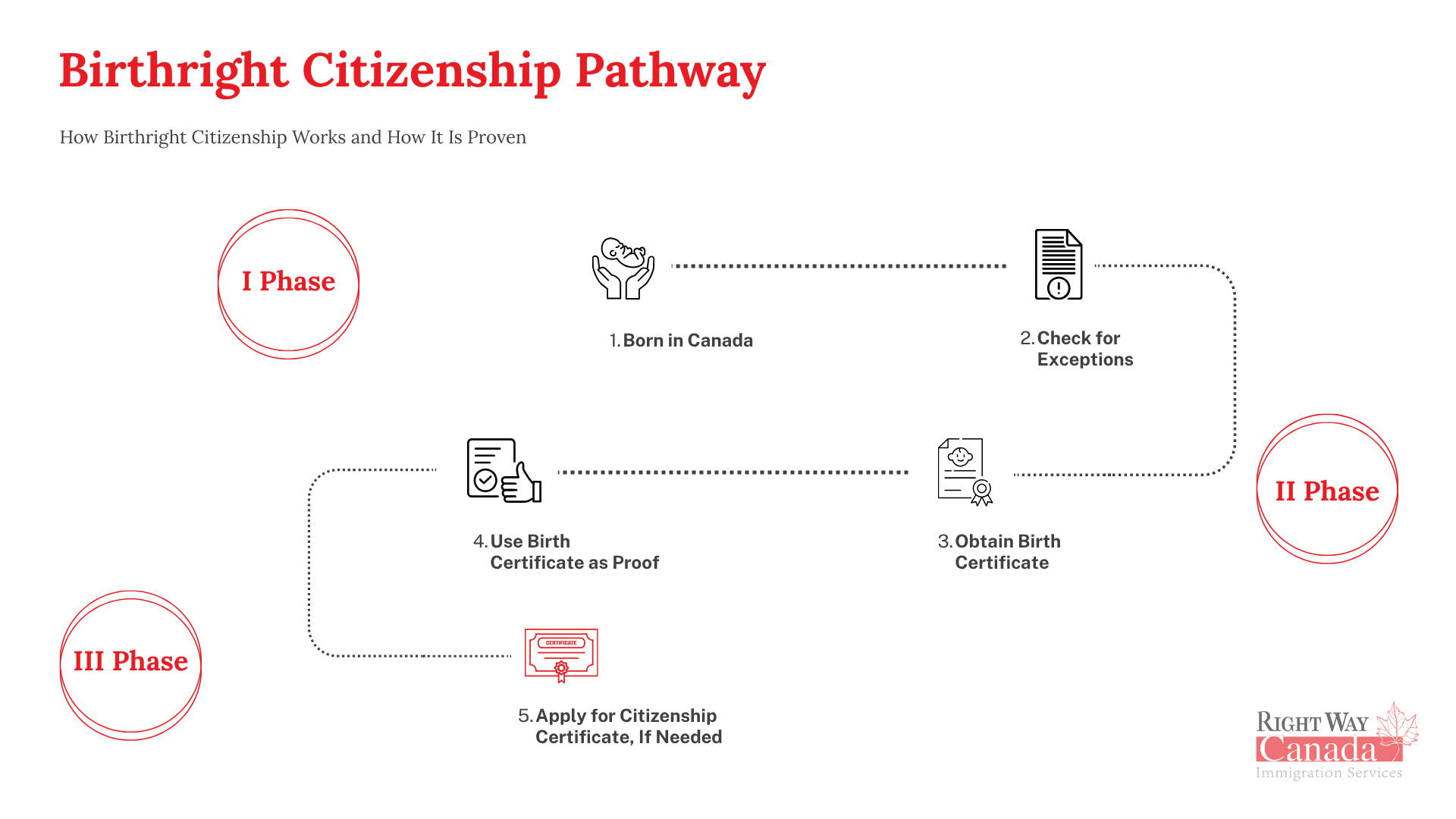
Most people born in Canada automatically acquire Canadian citizenship at birth. They do not need to apply to become citizens and therefore do not have a citizenship application processing time.
A provincial or territorial birth certificate is generally sufficient proof of citizenship. The main exception may apply when, at the time of birth, neither parent was a Canadian citizen or permanent resident and one parent held qualifying diplomatic privileges or immunities.
A person born in Canada may apply for a citizenship certificate if additional proof is required or there is uncertainty about their status. In that case, there is no separate birthright citizenship processing time. Applicants should check IRCC’s official processing-time page and use the current estimate for citizenship certificate, or proof of citizenship, applications.
Processing may take longer if birth records are missing, information is inconsistent or IRCC must verify a parent’s diplomatic status. If citizenship is confirmed, IRCC issues an electronic or paper citizenship certificate.